
Frequently Asked Questions

Devices, data handling and research use: what teams ask before working with us.
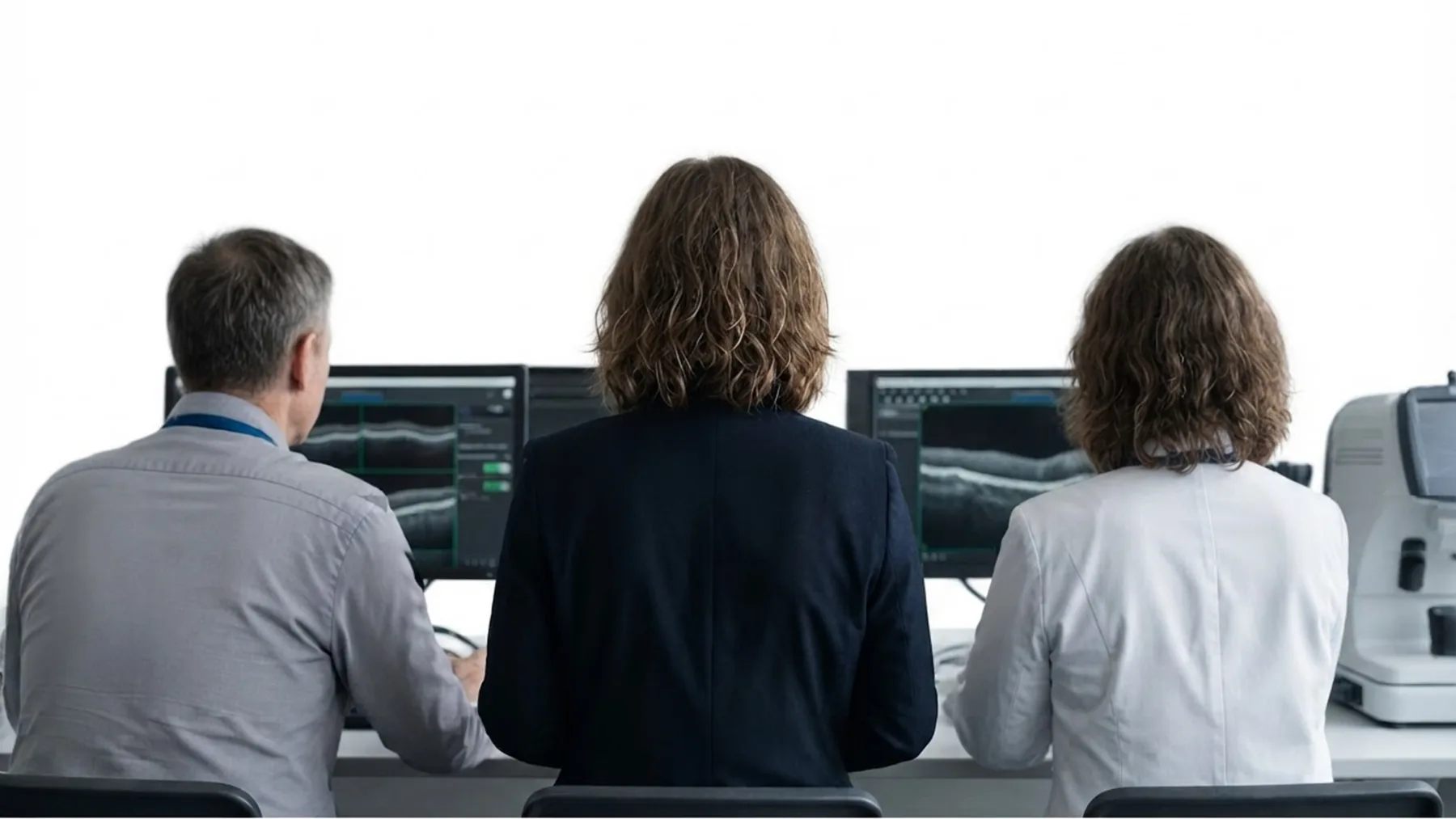
Line-field confocal optical coherence tomography (LC-OCT) is a non-invasive imaging method that captures skin structure at high resolution. It produces stacks of cross-sectional images through the skin's layers.

UNDULIX traces the dermal–epidermal junction (DEJ) on every slice of an LC-OCT scan, marks where the trace is less certain, and computes DEJ undulation, roughness and surface area. It also rebuilds the junction as a 3D surface. Epidermal thickness is planned; it needs a skin-surface trace the model doesn't produce yet.

UNDULIX reads LC-OCT volumes exported as .tif or .tiff image stacks. W Labs does not supply imaging devices: your lab measures on its own instrument. If your device exports another format, mention it in your inquiry.

UNDULIX is a desktop application for Windows and macOS that runs on your own workstation, so scans are analyzed locally. For a PoC or joint project, we agree with you in writing how scans are shared and stored before any data moves.

UNDULIX is intended for research use only and is not intended for diagnostic or therapeutic use. Research teams use it as an additional objective measurement alongside their existing assessments.

Manual slice-by-slice tracing is slow and varies between reviewers. UNDULIX applies the same analysis across a whole stack and records the model version and settings with every result, so runs can be compared and repeated.

Researchers reviewing LC-OCT skin scans on workstations
UNDULIX by W Labs

See the Invisible. Measure the Complex.

Start a research partnership

Tell us about your study and whether joint research or a PoC fits better. Our team replies by email.

WindowsmacOS

Available for Windows and macOS

Prefer email? contact@wsoft.space

FAQ · UNDULIX by W Labs
